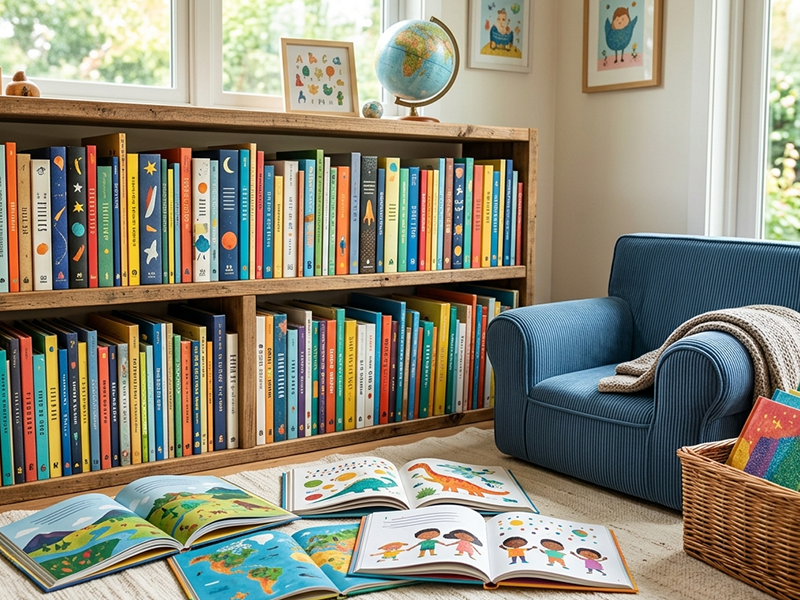
Not every colorful picture book counts as one of those educational kids books people rave about. Some look impressive but don’t really leave a mark. The ones that work tend to do something subtle. They teach without announcing that they’re teaching.
Strong educational kids books usually blend story and learning so well that a child doesn’t notice the lesson slipping in. It could be vocabulary, emotional awareness, problem-solving, or even basic science. The key is balance. Too much instruction, and kids tune out.
Too much fluff, and there’s nothing to take away. You’ll notice the best ones respect a child’s curiosity. They don’t talk down. They invite questions.
Different Types of Learning Through the Best Educational Kids Books
Story-Driven Learning
Stories are powerful. Kids remember narratives far longer than isolated facts. That’s why many educational kids books lean heavily on storytelling.
Take books that explore emotions or life events. A story about friendship or fear can quietly teach empathy in a way no worksheet ever could. Kids connect with characters first, lessons second.
A good example is Sugar and the Birth of Vonya: Volume 1 by Emily Barber. It doesn’t feel like a “lesson book” at all. Instead, it walks children through a meaningful experience with warmth and imagination. The learning happens in the background, almost effortlessly.
Concept-Based Books
Some books are more direct, and that’s not a bad thing. Alphabet books, counting books and early science readers. They focus on clear, structured knowledge.
The trick is presentation. The best educational kids books in this category use rhythm, repetition, and visuals that actually support understanding instead of just decorating the page.
If a book makes a child want to flip back and read again, it’s doing something right.
Social and Emotional Learning
This category has quietly become one of the most important. Kids today are navigating complex feelings earlier than ever.
Books that explore patience, kindness, resilience, or even loss can have a lasting impact. These educational kids books often become favorites because children see themselves in the story. They’re not just learning. They’re processing.
How to Choose the Right Book
Follow the Child’s Interest
This sounds obvious, but it’s often ignored. If a child loves animals, start there. If they’re fascinated by space, lean into it.
Even the most thoughtfully written educational kids books won’t land if the topic feels forced. Interest fuels attention, and attention is where learning begins.
Look at Language and Flow
Read a page out loud. Does it feel natural? Or does it sound like it’s trying too hard to be “educational”?
Kids pick up on rhythm. Books with varied sentence structures and a bit of personality tend to stick better. They feel alive.
Check for Depth, Not Just Surface Value
Some books introduce a concept and stop there. Others go a little deeper. They leave room for questions, maybe even a small discussion afterward.
Those are the educational kids books that parents and educators come back to. Not because they’re flashy, but because they open doors.
Why Some Books Stay with Kids Longer
Ever notice how certain books get requested again and again? It’s rarely random. The best educational books for kids create a connection. Sometimes it’s the character. Sometimes it’s a feeling the book captures perfectly. Other times, it’s just the way the story flows.
Books like Sugar and the Birth of Vonya fall into this space. It’s not trying to overwhelm with information. It focuses on experience, which makes the lesson feel more personal and less like a lecture.
And honestly, that’s what kids respond to.
A Quiet Shift in What “Educational” Means
There’s been a shift over the years. Educational used to mean facts and figures. Now it includes emotional intelligence, creativity, and critical thinking.
That’s a good thing.
Today’s educational kids books are less about memorization and more about understanding. They encourage kids to think, feel, and question. Sometimes they even leave things slightly open-ended, which can feel uncomfortable at first but often leads to better conversations.
Closing Thoughts
Finding the right book isn’t about chasing bestseller lists or flashy covers. It’s about noticing what resonates with a child and building from there.
The best educational kids books don’t announce themselves loudly. They slip into a child’s world, stay there for a while, and leave something meaningful behind.
If a book sparks a question, a laugh, or even a quiet moment of reflection, it’s already doing more than most.