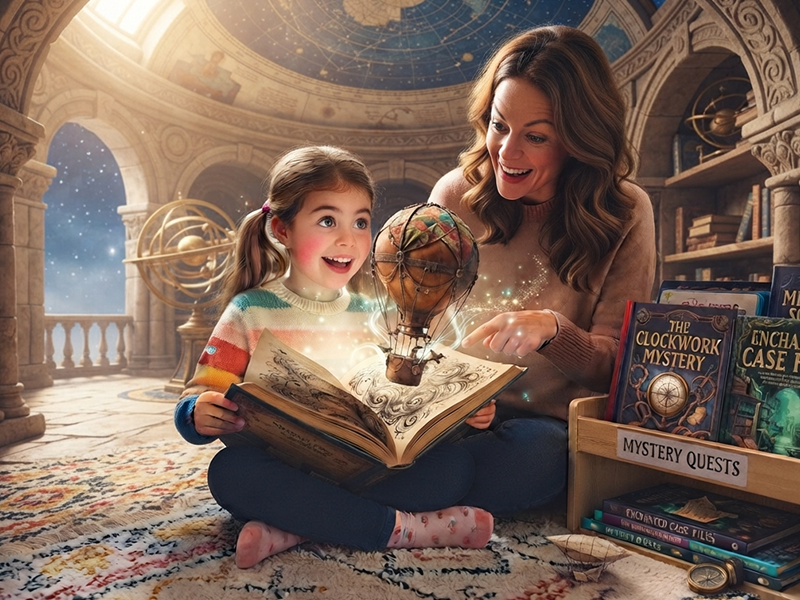
There is something irresistible about a good mystery. The hidden clue, the unexpected twist, the moment a young reader figures out the answer just before the character does. Kids’ mystery novels tap into that excitement while quietly building skills that last well beyond the final page. Among the wide world of children books, mysteries hold a special place because they turn reading into an active, thinking process rather than a passive one.
Why Mystery Stories Help Children Think Critically
When a child reads a mystery, they are not just following a story. They are gathering evidence, forming theories, and testing ideas as the plot unfolds. This kind of engagement strengthens critical thinking in a way few other genres can match. Kids’ mystery novels ask readers to pay attention to small details, recall earlier clues, and adjust their thinking as new information appears. That mental flexibility carries over into schoolwork, problem-solving, and everyday decision-making.
Building Curiosity and Observation Skills
Good mysteries reward careful readers. A character’s offhand comment or a small object mentioned early in the book often becomes important later. This trains children to slow down and notice details they might otherwise skip past. Many children’s books in this genre use repeated clues and patterns, encouraging kids to reread sections or flip back through pages, which naturally builds observation skills and patience.
How Mystery Reading Sparks Imagination
Imagination thrives when readers are given a puzzle instead of a straightforward answer. Kids’ mystery novels often leave just enough unsaid, prompting children to picture settings, predict outcomes, and imagine what a character might do next. This active participation makes reading feel less like a task and more like an adventure the child is solving alongside the characters.
Strengthening Vocabulary and Confidence
Mystery novels frequently introduce new vocabulary tied to suspense, investigation, and discovery. Words like clue, suspect, and evidence become familiar through repeated, natural use rather than memorization. As children successfully follow and solve a mystery, their confidence grows, which often leads to more independent reading habits. Parents who introduce children to books with mystery elements early on often see kids reach for books on their own, without needing constant encouragement.
Encouraging Independent Reading Through Mystery
Mystery stories naturally create momentum. The desire to know what happens next keeps children turning pages, which builds reading stamina over time. Kids’ mystery novels are especially useful for reluctant readers because the plot itself does much of the motivating work. Parents and educators looking to build strong reading habits often find this genre to be an easy entry point.
Best Kids Mystery Novels to Read
Sugar and the Birth of Vonya: A Farmyard Tale of Love and Discovery by Emily Barber
introduces Sugar, a gentle palomino mare, as she welcomes her foal alongside caring farm friends. Guided by Uncle Jimmy, this tender story celebrates curiosity, kindness, and the quiet wonders of farm life.
The Mysterious Benedict Society by Trenton Lee
Stewart follows four gifted children recruited to solve puzzles and stop a dangerous scheme, blending clever problem-solving with imaginative world-building.
Nancy Drew: The Secret of the Old Clock by Carolyn Keene
introduces young readers to the original girl detective as she uncovers secrets tied to a missing will and a hidden fortune.
Encyclopedia Brown, Boy Detective by Donald J. Sobol
features short, clever cases that invite kids to solve mysteries alongside a sharp young detective in his hometown.
The Westing Game by Ellen Raskin
presents a puzzle-filled inheritance mystery with sixteen heirs, each holding a clue toward solving an unexpected death.
Greenglass House by Kate Milford
combines a snowed-in inn, mysterious guests, and a boy determined to uncover the truth behind their unexpected arrivals.
Choosing the Right Mystery Books for Your Child
Mystery reading offers more than entertainment. It builds critical thinking, sharpens observation, and feeds imagination in ways that stay with children long after they close the book. Whether you are a parent, teacher, or librarian, introducing kids to mystery novels alongside other children’s books gives young readers the chance to think, wonder, and discover at their own pace. Sometimes the best lessons come wrapped in a good puzzle waiting to be solved.